Evolutionary Ecology of Microorganisms
Research Interests
Our group is doing research mostly in evolutionary ecology of microorganisms, with a focus on bacteria, viruses and plasmids. Our approach involves both laboratory work and theoretical research. We study cooperation, competition, spite, and sex among bacterial cells, and their impact on pathogenicity and antibiotic resistance.
Please visit our website here
![]()
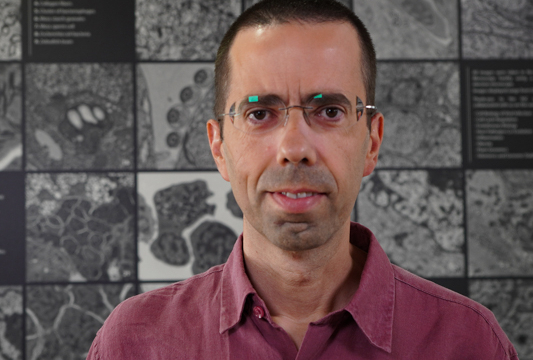
Francisco Dionisio
Ph.D. in Microbiology
University Paris VII, Paris
| Principal Investigator | |
|---|---|
| Phone | 21 440 7915 |
| Extension | 215 |
| Status | External Group |
| Website | |
Group Members
Research Project
The role of commensal bacteria in the spread of antibiotic resistance genes
The aim of this project “The” is to perform a systematic study of the rate of transfer of several conjugative plasmids between different bacterial strains belonging to different species. Previous studies (Dionisio et al Genetics 2002) have shown that, although most strains are poor donors of a given conjugative plasmid, some strains exhibit a strong donor ability of this plasmid. Indeed, in this study - performed with sixteen enterobacterial strains, donor abilities of this plasmid spanned at least a million fold. Consequently, the presence of very efficient donor cells amongst bacterial populations can accelerate plasmid transfer by several orders of magnitude. We this new project, our expectations are that a systematic knowledge of plasmid transfer rates represents precious information with direct medical and environmental consequences. Although the significance of cross-species transfer of antibiotic-resistance genes and conjugative plasmids has been fully recognized, the role of amplifier non-pathogenic bacteria in this progression is still unknown.
Funding
PTDC/BIA-BDE/66180/2006
The role of commensal bacteria in the spread of antibiotic resistance genes
Research Project
BIOCONTRACT - Cooperation in mutualisms: contracts, markets, space, and dispersal.
The aim of the project BIOCONTRACT is to study cooperation in mutualisms. In biology, a mutualism is an interaction between species that results in increased fitness for both partners. BIOCONTRACT applies contract theory from economics in order to investigate how the evolution of ‘natural contracts’ can distribute the benefits of mutualism among partners. The project draws and expands upon the economic theory of self-enforcing contracts to investigate how mutualisms persist in the face of potential exploitation by cheaters (organisms that reap the benefits of mutualism but do not reciprocate). BIOCONTRACT parameterizes the models that are developed by using data from several empirical systems. In so doing, it aims to describe general mechanisms that promote and maintain cooperation in diverse biological systems.
Principal Investigators of BIOCONTRACT:
• Ulf Dieckmann, International Institute for Applied Systems Analysis (IIASA), Laxenburg, Austria
• Francisco Dionisio, Universidade de Lisboa, Portugal
• Drew Fudenberg, Harvard University, Cambridge, USA
• Douglas W. Yu, University of East Anglia, Norwich, UK
• Jerry Green, Harvard University, Cambridge, USA
• Jérôme Orivel, Université Toulouse 3, France
• Naomi Pierce, Harvard University, Cambridge, USA (leader)
• Istvan Scheuring, Eötvös University, Budapest, Hungary
Funding
TECH/0001/2007 (until 14/August/2011; P.I. Francisco Dionisio) (FCT) and European Science Foundation - Eurocores/TECT
BIOCONTRACT - Cooperation in mutualisms: contracts, markets, space, and dispersal.
Research Project
Mathematical models of evolutionary processes – mostly evolution of cooperation and other social interactions
This project actually comprises two grants (see bellow). Our aim is modeling social interactions, mostly applying evolutionary game theory and kin selection.
Funding
PTDC/MAT/66426/2006 (until 30/April/2010; PI: Fábio Chalub) and PTDC/FIS/70973/2006 (until 31/December/2011; PI: Jorge M. Pacheco)
Publications
(selected) Updated May (2011).
Silva, R.F., Mendonça, S.C.M., Carvalho, L.M., Reis, A.M., Gordo, I., Trindade, S., Dionisio, F. (2011). Pervasive Sign Epistasis between Conjugative Plasmids and Drug-Resistance Chromosomal Mutations PLoS Genetics (in press)
Trindade, S., Sousa, A., Xavier, K., Dionisio, F., Ferreira, M.G. and Isabel Gordo (2009). Positive Epistasis Drives the Acquisition of Multidrug Resistance PLoS Genet 5(7) :e1000578
Nogueira, T., Rankin, D.J., Touchon, M., Taddei, F., Brown, S.P., Rocha, E.P.C. (2009). Horizontal Gene Transfer of the Secretome Drives the Evolution of Bacterial Cooperation and Virulence Current Biology 19 (20) :1683-1691
Dionisio, F., Gordo, I. (2007). Controlling excludability in the evolution of cooperation Evolutionary Ecology Research 9(2) :365-373
Combadão,J., Campos, P.R.A., Dionisio, F and Gordo, I. S. (2007). Small-World networks decrease the speed of Muller's ratchet Genetical Research (in press)
Dionisio, F. (2007). Selfish and spiteful behaviour through parasites and pathogens Evolutionary Ecology Research 9 :1199-1210
Dionisio, F., Gordo, I. (2006). The Tragedy of the Commons, the Public Goods Dilemma, and the meaning of Rivalry and Excludability in Evolutionary Biology. Evolutionary Ecology Research 8 :321-332
Dionisio, F. (2005). Plasmids survive despite their cost and male-specific-phages due to heterogeneity of bacterial populations Evolutionary Ecology Research 7 :1089-1107
Dionisio, F., Conceição, I.C., Marques A.C.R., Fernandes, L. and Gordo, I. (2005). The evolution of a conjugative plasmid and its ability to increase bacterial fitness Biol. Lett. 1 :250-252
Dionisio, F., Matic, I., Radman, M., Rodrigues, O. R., Taddei, F. (2002). Plasmids spread faste in heterogeneous bacterial communities. Genetics 162(4) :1525-1532
Vulic, M., Dionisio, F. et al. (1997). Molecular Keys to Speciation: DNA Polymorphism and the Control of Genetic Exchange in Enterobacteria. Proc Natl Acad Sci 94 :9763-9767